

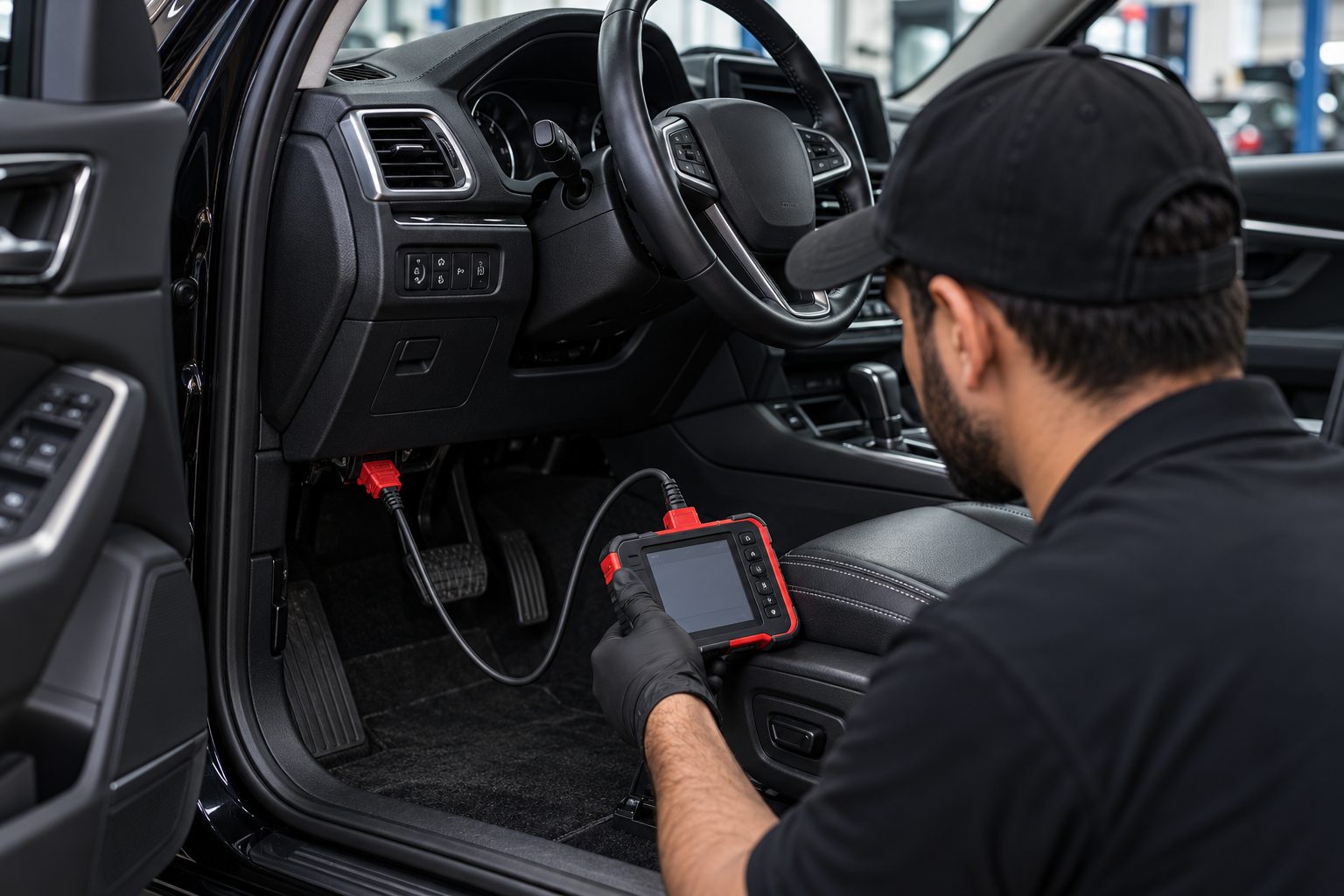
A diagnostic scan connects to the car's OBD port and reads what its control units have recorded: stored fault codes, pending codes, readiness monitor status and live sensor data. It can reveal problems a viewing would miss — including signs that codes were recently cleared — but it can't detect accident repairs, wear or many mechanical faults, so it works best as part of a full inspection.
Diagnostics are one of the most useful tools in a pre-purchase inspection, and one of the most misunderstood. Here’s what a scan does and doesn’t tell you.
What OBD is
Most cars from the late 1990s and 2000s onwards have an on-board diagnostics (OBD) system. The car’s control units monitor the engine, emissions system and, depending on the car, other systems such as the transmission, ABS and airbags. When they detect a fault, they store a code.
The OBD port is usually under the dashboard on the driver’s side. An inspector plugs in a scanner to read the information.
What a scan reads
Stored fault codes
Faults the car has detected and confirmed. Some turn on a warning light; some don’t.
Pending codes
Faults that have been detected once but not yet confirmed. These often point to intermittent problems — the kind that come and go and are easy for a seller to miss or not mention.
Readiness monitors
The car continuously runs self-tests on systems such as the catalytic converter and oxygen sensors. Each test reports “ready” once it has completed. Clearing fault codes resets these monitors, so several incomplete monitors on a car that has supposedly been driven normally can be a sign that codes were cleared recently.
Live data
Real-time readings such as coolant temperature, fuel trims and sensor values. These help an inspector judge whether systems are behaving normally.
Beyond the engine
Depending on the car and the scanner, diagnostics can also reach modules for the transmission, ABS, airbags (SRS), body electronics and driver-assistance systems. This is how inspectors find problems such as stored airbag faults.
What a scan can’t tell you
- Whether the car has had accident repairs or repainted panels
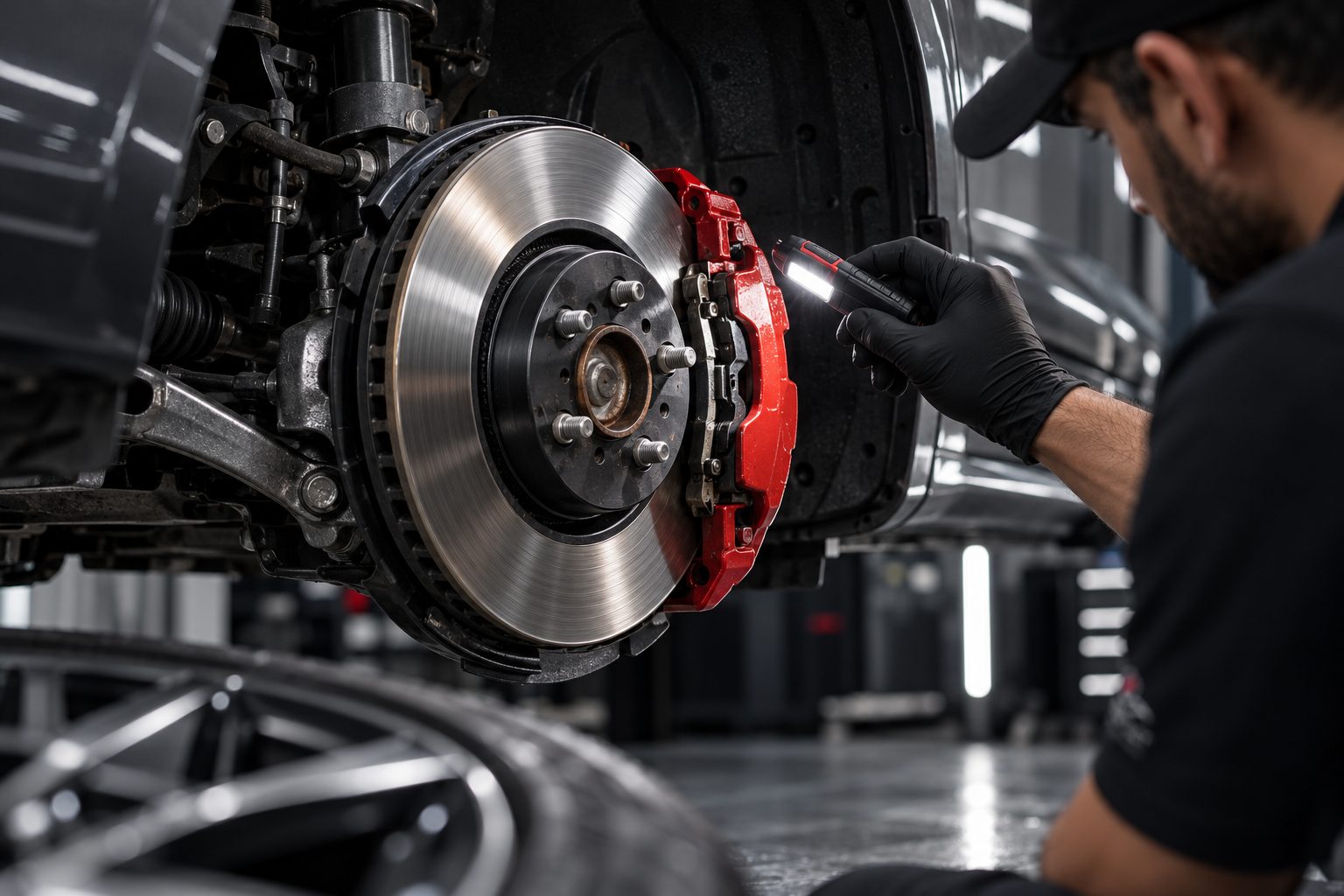
- How worn the brakes, tyres, suspension and bushes are
- Whether there are leaks, rust or underbody damage
- Many mechanical problems that never trigger a code
- Whether the car’s history matches the seller’s story
That’s why our scan is one part of a full pre-purchase inspection, alongside a physical inspection and road test. It’s never a stand-alone answer.
Can a seller hide fault codes?
Codes can be cleared with an inexpensive tool, and a warning light can go out. But clearing codes leaves traces (incomplete readiness monitors), and the underlying fault usually returns. A road test and live data often reveal it again. An inspector who sees cleared codes will flag it so you can ask the seller why.
Diagnostics with Car Inspect
Advanced computer diagnostics (OBD scan) is included in both Pro and Premium. The results appear in your report alongside the inspector’s findings, so you can see what the codes mean for the car in front of you.